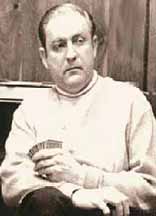
Nato nel 1928 ad
Hamilton, dove trascorse la gioventù prima di trasferirsi a Toronto, è
stato una delle più spiccate personalità del bridge nord americano ed ha
formato con Sammy Kehela un tandem di
grande affiatamento che per 30 anni ha conseguito lusinghiere affermazioni a livello internazionale.
Sposato con Helen, ebbero tre figli.
Affermato
civilista, ha rappresentato il Canada in
tutte le Olimpiadi dal 1964 al 1980 e poi ancora in quella del 1988, ed è anche stato chiamato a far parte della
rappresentativa americana nel tentativo non riuscito di sottrarre al leggendario
Vecchio Blue
Team la Bermuda Bowl.
Eric ha messo insieme, quattro medaglie d'argento nella
Bermuda Bowl
(1962, 66, 67, 74), due medaglie di bronzo alle
Olimpiadi (1968 e 72) ed
un'altra nella Rosenblum del
1982.
Oltre
a diversi Campionati Nazionali Canadesi, ha vinto nel circuito statunitense 14
titoli tra i quali ricordiamo: 3 Spingold
(1964, 65, 68), 2 Vanderbilt
(1961 e 1970), un Mitchell
(1962), due Wernher (1954 e 55).
Nella
Categoria Seniores ha vinto l'argento nel
Mondiale a Coppie del 1994.
Tra i suoi contributi al
bridge dichiarativo ricordiamo il 2♦ Murray e la
famosa Drury di cui è coautore con
Douglas Drury di San Francisco.
E' stato per lungo tempo al primo posto nella
classifica Word Life Masters della
WBF
ed ha ricoperto varie cariche federali nell'organizzazione bridgistica
canadese della quale è stato il principale promotore ed uno dei
fondatori.
La ACBL gli ha concesso
l'onore di far parte della Hall of Fame
nel 2001 e la CBF nel 2010.
É scomparso a Barrie il 19 maggio del 2018.

 Born in 1928 in
Hamilton, where he spent his youth
before moving to Toronto, he was one
of the most distinguished
personalities of North American
bridge and has formed with Sammy Kehela a tandem of great harmony
that for 30 years has achieved
flattering affirmations at
international level .
Born in 1928 in
Hamilton, where he spent his youth
before moving to Toronto, he was one
of the most distinguished
personalities of North American
bridge and has formed with Sammy Kehela a tandem of great harmony
that for 30 years has achieved
flattering affirmations at
international level .
Married with
Helen, they have three sons.
An established
civilian, he represented Canada in
all the Olympics from 1964 to 1980
and then again in 1988, and he was
also called to join the American
representative in an unsuccessful
attempt to steal the Bermuda Bowl
from the legendary Old Blue Team.
In recent
years he has put together four
silver medals in the Bermuda Bowl
(1962, 66, 67, 74), two bronze
medals at the Olympics (1968 and 72)
and another in the Rosenblum of
1982.
In addition to
several Canadian National
Championships, he won 14 titles in
the US circuit including: 3 Spingold
(1964, 65, 68), 2 Vanderbilt (1961
and 1970), a Mitchell (1962), two
Wernher (1954 and 55) .
In the Seniors
category he won silver in the 1994
Couples World Cup.
Among his
contributions to the declarative
bridge we mention the 2♦ Murray and
the famous Drury of which he is
co-author with Douglas Drury of San
Francisco.
He was for a
long time in first place in the Word
Life Masters ranking of the WBF and
has held various federal positions
in the Canadian bridge organization
of which he was the main promoter
and co-founder.
The ACBL
granted him the honor of being part
of the Hall of Fame in 2001 and the
CBF in 2010.
He passed in
Barrie away
on May 19, 2018.
 Eric Rutherford Murray, est non seulement un des plus grands de tous les temps,
c’est aussi une véritable légende dans le monde du bridge. Éminent avocat d’affaires
civiles à Toronto, Murray a gagné un des premiers procès de plus d’un
million de dollars à la cour civile du Canada. C’était un raconteur
légendaire et un excellent orateur. Il est né en 1928 et a vécu à Hamilton,
ON, avant de s’installer à Toronto pour exercer son métier d’avocat et
jouer au bridge. Murray a été président de la Ligue de bridge de l’Ontario
à l’aube de ses premiers jours et a contribué à son union avec l’ACBL. Il
a été l’un des co-fondateurs de la Fédération canadienne de bridge.
Eric Rutherford Murray, est non seulement un des plus grands de tous les temps,
c’est aussi une véritable légende dans le monde du bridge. Éminent avocat d’affaires
civiles à Toronto, Murray a gagné un des premiers procès de plus d’un
million de dollars à la cour civile du Canada. C’était un raconteur
légendaire et un excellent orateur. Il est né en 1928 et a vécu à Hamilton,
ON, avant de s’installer à Toronto pour exercer son métier d’avocat et
jouer au bridge. Murray a été président de la Ligue de bridge de l’Ontario
à l’aube de ses premiers jours et a contribué à son union avec l’ACBL. Il
a été l’un des co-fondateurs de la Fédération canadienne de bridge.
Éric Murray est le
Canadien qui a eu le plus de succès au bridge. En plus de toutes ses victoires
avec Sami Kehela, Murray a aussi remporté le Vanderbilt en 1961 avec Charles
Coon, les Men’s Pairs en 1954 et 1955 avec Doug Drury, et les Master Mixed
Teams (1962) et les Mixed Pairs (1963) avec Agnes Gordon. Il a aussi gagné les
Pairs Trials avec Charles Coon pour la Bermuda Bowl de 1962, où il a terminé
deuxième derrière l’Italie. « Je connais l’hymne national italien par
cœur, » dit Murray. Murray a aussi remporté le trophée Lou Herman pour la
meilleure performance au National d’automne de 1963. Il a remporté le CNTC en
1980, 1981 et 1987 et le CSTC en 2007.
Eric Murray est l’auteur
d’une convention, qui porte son nom, le deux carreaux Murray, et en a
développé une autre, Drury, avec Doug Drury. Kehela et lui ont reçu un ultime
hommage lorsque Roy Hughes a écrit un livre à leur sujet, « Canada’s Bridge
Warriors », qui a remporté le prix du livre de l’année décerné par l’International
Bridge Press Association en 2007.
Il est décédé le 19 mai 2018.