
Home Page

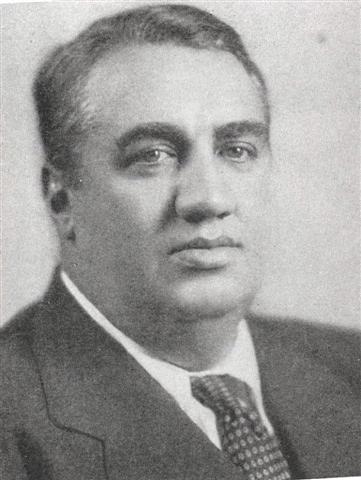
Philip Hal  Sims

Hal Sims nacque a Selma in Alabama nel 1886 ed è stato uno dei più grandi giocatori americani ante 1935.

Mentre era membro dell'U.S. Army Corp nel 1917 incontrò e sposò Dorothy Rice una celebre bridgista del tempo e, dopo la prima Guerra Mondiale, si dedicò completamente agli sport nei quali eccelleva ed al bridge.

 Ai tempi dell'auction fece parte con Sidney Lenz del mitico Knickerbocker Wisth Club Team e, successivamente, fu sponsor e capitano della celebre Squadra dei Four Horseman (con Oswald Jacoby, David Burnstine e Willard S. Karn) con la quale, dal 1931 al 1933, vinse praticamente tutto.

 Il suo circolo "The Deal Club" che fondò a Deal nel New Jersey fu, tra il 1930 ed il 1935,  il quartiere generale dei maggiori esperti del tempo ed una fucina dalla quale uscirono molti buoni giocatori.

 Hal, che si distingueva per i suoi quasi 2 metri di statura e per i suoi 150Kg. di peso, elaborò assieme alla moglie Dorothy un complesso sistema dichiarativo con il quale sfidò il mitico Ely Culbertson nel 1935 sulla lunghezza di 150 rubber in quella che fu chiamata la Battaglia dei Giganti, uscendone, però, sconfitto.

 Dopo questa sconfitta, Hal dedicò la maggior parte delle sue energie al golf giocando a bridge solo occasionalmente.

 Hal morì nel 1949 di un infarto mentre giocava una mano di bridge a Cuba nell'Havana Country Club dove, con sua moglie, era uso passare l'inverno negli ultimi anni della sua vita.

La ACBL nel 1997 lo elesse nella Hall of Fame.

  Phillip Hal Sims --- the "Shaggy Giant" whose system had the greatest expert following prior to 1935 --- was the first recipient of the von Zedtwitz Award.

Sims (1886-1949), who stood six-foot-four and weighed more than 300 pounds, was born in Selma AL and represented U.S. banks in foreign countries from 1906 to 1916. While serving in the U.S. Army Air Corps in 1917, he met and married Dorothy Rice, one of the first U.S. aviatrixes and a noted sculptor and painter.

After World War I, Sims devoted himself chiefly to competitive sports --- including bridge. He held a national trapshooting record and won the Artists’ and Writers’ Golf tournament in 1937.

In auction bridge, he was a member of the highest-ranked team --- the Knickerbocker Whist Club team --- which included Sydney Lenz, Winfield Liggett, George Reith and Ralph Leibenderfer.

Sims and Ely Culbertson, who "fought relentlessly at the bridge table and outside," according to Culbertson, teamed up to record the largest score in the history of the pairs championship of the Auction Bridge League. They also played their first contract bridge together.

"Secretly we admired each other" Culbertson wrote in his autobiography, The Strange Lives of One Man.

"Hal was my greatest rival and dearest friend," Culbertson wrote in Sims’ obituary in The Bridge World. "For years we fought each other tooth and nail . . . Now he would come to the top, and now I. And never in all these years was there the slightest drop of personal bitterness in his big heart."

Sims was captain of the contract bridge team called the Four Horsemen. Other members were Williard Karn, Oswald Jacoby and David Burnstine (Bruce). They won most of the principal American tournaments --- the American Bridge League’s contract Challenge Trophy, the Vanderbilt Cup and the American Whist League and Eastern States’ auction championships --- from 1931 to 1933.

When Jacoby and Burnstine formed the Four Aces with Howard Schenken and Michael Gottlieb, Sims began to play more bridge with his wife. The two challenged Ely and Josephine Culbertson to a 150-rubber match in 1935.

The match ended with victory for the Culbertson’s by a margin of 16,310 points. The biggest rubber, however, went to the Sims side when Dorothy took time off to help Jo celebrate the sixth birthday of Bruce Culbertson. Strongly supported by the rising B. Jay Becker, still living in Philadelphia at the time, Sims defeated his arch rival by 2610 points.

Albert Morehead, who wrote Culbertson’s obituary in the January 1956 issue of The Bridge World, recalled that the two men "used to pursue their bitter enmity all day and then stroll off, arm in arm, to see a midnight movie together."

Sims died in 1949 while bidding a hand at his winter home in Cuba. His epilogue to bridge players had been stated earlier:

Sound underlying principles of bidding are sound for all time. But the tactics for applying them may change and a flexible-minded player recognizes this.

The last word has not been said on contract bidding. I hope it will never be. If the time comes when the game ceases to grow, contract will no longer hold our interest.

 Indice / Index

Precedente / Previous Successivo / Next