|
Le Origini del Bridge |
L'esclusivo e conservatore "Portland Club" di Londra, tiene fuori della sua porta il Whist-Bridge, fin quando un Socio di grande riguardo quale era Lord Brougham, di ritorno da una lunga permanenza al Cairo, nel 1894 lo fa conoscere ai Soci più importanti del Club.
Del più antico testo conosciuto di bridge rimangono tre copie conservate in alcune biblioteche inglesi, esso risale al 1896 e titolava "Biritich, or Russian Whist" scritto da John Collinson (1842-1992).
|
|
Negli Stati Uniti Henry J. Barbey lo introduce nel Whist Club di New York che già nel 1897 ne emana le prime regole, mentre fin dal 1890 nella stessa città una certa Kate Weelock, che 4 anni prima aveva ideato il Whistograf (antenato del vu-graf), apre la prima scuola nella quale si insegna il gioco.
La scala gerarchica dei colori è ancora quella classica del poker, ogni presa oltre la sesta, vale 12 punti se realizzata a senza atout, 8 a cuori, 6 a quadri, 4 a fiori, ed infine, soltanto 2 se realizzata a picche. Per la manche sono necessari 30 punti così che basta mantenere 3SA per aggiudicarsene il premio, ma, per lo stesso scopo, ne servono 10 a cuori, 11 a quadri e 13 a fiori, mentre, non è possibile arrivare a manche in un sol colpo scegliendo come atout il seme di picche. Inoltre, fatto curiosissimo per il bridgisti odierni, in conseguenza di questa attribuzione dei punteggi, era del tutto lecito annunciare di volersi impegnare per 1♥, quando gli avversari erano già arrivati a 3♠!
Anche così, il Whist-Bridge è molto più divertente del suo predecessore e, dopo la capitolazione dell'esclusivo "Portland Club", il successo del gioco in tutto l'Impero Britannico è tanto fulmineo che, tramite gli ufficiali inglesi di stanza in Oriente, arriva fino in India, dove, nel 1904, alcuni di loro, per stabilire l'atout nella quale la smazzata deve essere giocata, inventano una sorta di primitiva Asta Licitativa che, finalmente, fa assumere al gioco delle sembianze che lo rendono molto simile al Bridge di oggigiorno.
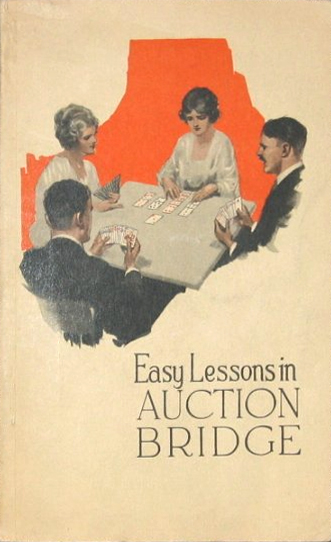
Con questa importantissima innovazione della scelta della briscola attraverso un'asta parlata, al Whist-Bridge, succede l'"Auction Bridge". Questa competizione licitativa, implicava la formulazione di regole semantiche di non immediato apprendimento ma, conferiva alla capacità di giudizio di ogni giocatore una tale importanza, tanto da divenire l'elemento determinante per il successo del gioco su larga scala.
Le regole dell'"Auction Bridge" vengono codificate all'inizio del secolo scorso da F. Roe, uno di quei funzionari inglesi che nel lontano Bengala aveva avuto l'idea primigenia di disputarsi, attraverso un'asta, il diritto di giocare con il Morto nell'atout desiderata. Il manuale viene pubblicato ad Allahabad sotto lo pseudonimo di John Doe (il Mario Rossi degli anglosassoni) nel 1904.
Vale la pena di ripercorrere la nascita per caso dell'Auction Bridge. Tre funzionari inglesi del British Civil Service, negli anni a cavallo tra i due secoli scorsi erano stati trasferiti a Rampur-Bauliah nel Bengala. Si trattava del già citato F. Roe che assieme ad un certo Hudson e ad un terzo giocatore del cui nome non è rimasta traccia, si trovarono impossibilitati a fare la loro abituale partita di Whist-Bridge per l'impossibilità di trovare un quarto giocatore. Spinti dalla necessità, ebbero l'idea di disputarsi tra loro in una asta il colore di Atout e il diritto di giocare la mano avendo come dirimpettaie le carte del quarto giocatore mancante. Così, in un angolo sperduto dello sconfinato continente indiano, erano nati il Morto e la Licita!
Il 16 gennaio del 1904, Oswald Crawford aveva pubblicato in un articolo comparso sul "Times" un compendio delle regole del nuovo gioco, più tardi, il 24 aprile del 1906, ne aveva pubblicato uno simile ma più dettagliato sul "Daily Mail" e lo stesso anno l'Auction Bridge fece il suo ingresso ufficiale al Bath Club di Londra.
Questa nuova versione del gioco era molto più divertente ed ebbe una rapida diffusione così che il "Portland Club", da questa parte dell'Atlantico, ed il "Whist Club" di New York, dall'altra, aggiornarono continuamente le regole e, di fatto, né diventano i depositari, fin quando, verso la fine degli anni '20, grazie alle invenzioni di alcuni giocatori, l'"Auction Bridge" assume quella vocazione agonistica che, poco più tardi e, finalmente con l'attuale nome di Bridge, lo eleggerà a Signore incontrastato di tutti i Giochi di Carte.
Il perché alla fine sia stato scelto questo nome per il gioco è un fatto che rimane alquanto misterioso.
|
|
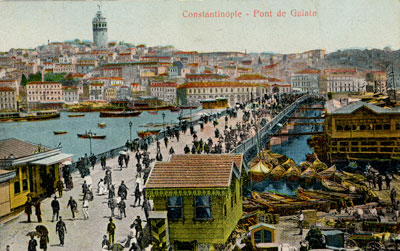
| Costantinopoli nel 1912 |
C'è chi lo attribuisce alla derivazione turca del russo Biritich, che suonando come Britch, poteva essere facilmente inteso e tradotto con Bridge; c'è, invece, chi lo fa risalire al fatto che gli addetti dell'Ambasciata Inglese per andare a giocare al caffè "Le Khédive" dovevano ogni giorno attraversare il "Galata Bridge" che a Costantinopoli univa le due città di Galata e di Pera.
In ogni modo, la precedente associazione del Bridge con il Whist, sembra far escludere che il nome sia una specie di allegoria per ricordare la comunicazione che deve instaurarsi tra i due partner nella fase della Licitazione, come spesso viene erroneamente dedotto da chi si avvicina al gioco.
Con l'Auction-Bridge si passò dalla scala gerarchica dei semi tipica del poker a quella ancora oggi valida (picche, cuori, quadri, fiori), tuttavia, ancora non esisteva il concetto di vulnerabilità e le prese valevano 10 punti se realizzate a senza atout, 9 se con atout picche e, poi, a scendere, fino a 6, quando venivano realizzate con atout fiori.
|
|
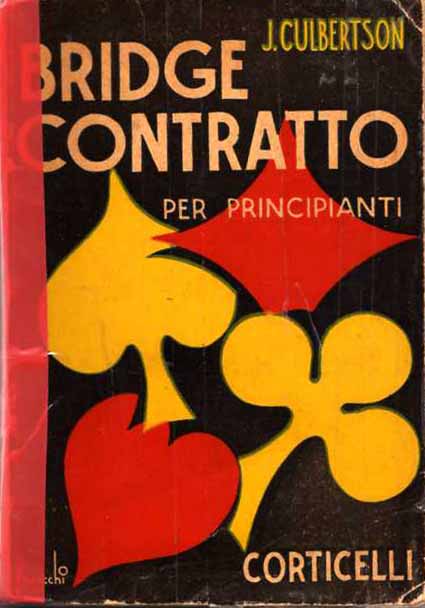
| Edizione Italiana del 1944 |
Per conquistare una Manche era necessario totalizzare 30 punti ed il premio per averla conseguita era di 150 punti, il Rubber se lo aggiudicava chi arrivava prima a due manche e conferiva un premio aggiuntivo di 250 punti. I premi erano indipendenti dal numero delle prese dichiarate e quindi l'asta era importante solo per aggiudicarsi il diritto di giocare la mano. Le penalità erano di 50 punti per ogni presa in meno (100 se contrata e 200 se surcontrata), i premi per gli slam erano rispettivamente di 50 e 100 punti. Infine, erano anche previsti premi per l'ausilio della dea bendata (a partire da tre onori nel seme di atout o da tre Assi) e la possibilità di contrare e surcontrare era illimitata.
Molta della fortuna del bridge fu riposta nel fatto che, grazie ad una proposta del 1926 fatta dal grande giocatore americano Milton Work, era finalmente possibile valutare le potenzialità di una Mano con un metodo semplice ed immediato (quello ancora oggi in vigore dei Punti Onori: A=4, R=3, D=2, F=1). Fu l'autorevolezza del suggeritore a decretarne il grande successo, perché a detta di Culbertson l'idea era già nota nel 1904 tra i giocatori di Pitch e già nel 1915 Bryant Mc Campbell l'aveva resa nota al pubblico facendone la base di un suo libro contenente principi per l'epoca altamente innovativi.
Nel 1922 viene fondata la prima rivista specializzata "The Auction Bridge Magazine" e nel 1927 viene fondata la prima Federazione nella storia del gioco: "The American Action Bridge League".
Mentre l'Auction guadagnava sempre più adepti, nel 1912, sempre nella lontana India e, più tardi, nel 1918 in Francia, prese vita il "Plafond Bridge" che può essere considerato il vero progenitore del Bridge dei nostri giorni.
Il "Plafond Bridge", nella sua breve e circoscritta vita (ebbe grande diffusione solo nei Paesi francofoni), ebbe l'indiscusso merito di introdurre il principio basilare che le prese valevoli per la partita erano solo quelle del contratto dichiarato vincendo l'asta licitativa e che, di conseguenza, le surélevée venivano ad avere un valore molto relativo.
Il Plafond rivedeva anche il punteggio dei premi e delle penalità rendendolo più ragionevole ed appropriato al rischio assunto e prosperò nei Paesi francofoni fin quando, nel 1932, Culbertson non sfidò la squadra francese di Bellanger in un celebre incontro risoltosi in un nulla di fatto.
Ma nel frattempo, nel 1925 nella storia del Bridge si verificò un evento epocale.
Durante una crociera che attraversando il Canale di Panama portava la sua motonave "Finlandia" da Los Angeles all'Avana, il miliardario e sportivo americano Harold Stirling Vanderbilt vincitore di tre America's Cup, partorì assieme ai suoi ospiti Francis Bacon III, Frederic Allen e Dudley Pickman, l'idea finale che diede origine al "Contract Bridge".
Riprendendo le idee buone del Plafond, viene attribuito un congruo premio per le Manche e per gli Slam, vengono stabilite delle congrue penalità per le Prese di Caduta e, soprattutto, suggerito da una passeggera rimasta sconosciuta, viene introdotto il concetto della Vulnerabilità. La scala gerarchica dei colori che già aveva subito dei cambiamenti con l'Auction, divenne quella dei nostri giorni con le picche che dominano gli altri tre semi e che valgono 30 punti per ogni presa come le cuori e, nell'ordine, le quadri e le fiori con il valore di 20 punti ciascuna e, infine, i Senza Atout con il valore di 35. Leggermente postuma è, invece, la definizione che la prima presa a Senza Atout, a differenza delle altre che ne valgono 30, valeva 40 punti.
Con il "Contract Bridge", salvo differenze minime, era nato il Bridge che si gioca oggigiorno.
La diffusione del Contract negli Stati Uniti fu immediata e straordinaria e dopo qualche resistenza il nuovo metodo si impose anche in Europa con buon ultima la Francia che dovette mandare in soffitta il suo Plafond.
|
|
Nel 1927, la neonata American Auction Bridge League organizzò il primo Campionato a Squadre americano, che forse fu anche il primo del Mondo organizzato in forma ufficiale. Esso fu vinto, neanche a dirlo, da un quartetto composto dal già ricordato Culbertson, Theodore Lightner, Ralph Reed Richard e Waldemar von Zedtwitz.
Le regole del Contract furono affinate progressivamente negli anni seguenti in base ad accordi intercorsi tra il Portland Club di Londra, il Whist Club di New York e la Commission Française du Bridge.
|
|
John Templeton Mitchell (per i Tornei a Coppie), Cassius M. Paine e J. L. Sebring (per i Tornei Duplicati) e, più tardi, Edwin Cull Howell (per i Tornei a Coppie a Classifica Unica), ideano le Regole di Movimento grazie a quali tutti i giocatori possono misurarsi con le stesse carte, eliminando buona parte dell'influenza della Dea Bendata e distinguendo in maniera perentoria il Bridge da tutti gli altri giochi d'azzardo, fino a proporlo prepotentemente come il Re incontrastato di tutti i giochi di carte.
Il massimo artefice del successo su larga scala del Contract-Bridge fu il già più volte ricordato Ely Culbertson che sgominò ogni avversario dando ogni volta alle sue temerarie sfide una risonanza mediatica senza uguali.
Le sue celeberrime sfide lanciate tra il 1931 ed il 1935 agli inglesi, ai francesi e ai compatrioti (Battaglia del Secolo e Battaglia dei Giganti) e le sue vittorie nelle Schwab Cup, ebbero risonanza mondiale e contribuirono in maniera determinante a far crescere la popolazione dei giocatori di tutto il mondo fino a portarla a contarne diversi milioni.
Ely, che aveva sposato Josephine Murphy la migliore giocatrice americana del tempo, insieme a lei fondò nel 1929 la prestigiosa rivista "The Bridge World" che fece milioni di proseliti in tutto il mondo anglofono e che ancor oggi è la più prestigiosa pubblicazione esistente.
Il famosissimo "Blue Book" che descriveva il Sistema di Licitazione da lui ideato, divenne il libro più venduto d'America e fece assieme a quella del Bridge, la fortuna personale del suo autore.
I suoi libri furono venduti a milioni di copie ed il suo metodo dichiarativo, basato sulla valutazione della Mano in Prese Onori, travalicando gli effettivi meriti che aveva, negli anni '30 si impose al mondo intero.
Dopo il secondo conflitto mondiale, Charles Goren, rispolverando i Punti Milton Work, lanciò un metodo di dichiarazione semplice e relativamente efficace che ebbe un tale successo da farlo conoscere in tutto il mondo con l'appellativo di "Mister Bridge".
Con il passare del tempo, nascono le Federazioni Nazionali, quelle Soprannazionali e il Bridge continua la sua lenta evoluzione normativa che, attraverso lievi innovazioni, lo consegna al secondo millennio come un vero e proprio Sport della Mente.