
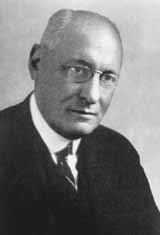
 Milton
Cooper Work (September 15, 1864 – June 27, 1934) in
the world of whist and auction bridge, which were predecessors to
contract bridge, the game we enjoy today, Milton Work was a giant. These
games were in their heyday at the turn of the 20th century, and Work was
recognized as the outstanding American authority on them.
Milton
Cooper Work (September 15, 1864 – June 27, 1934) in
the world of whist and auction bridge, which were predecessors to
contract bridge, the game we enjoy today, Milton Work was a giant. These
games were in their heyday at the turn of the 20th century, and Work was
recognized as the outstanding American authority on them.
Work’s best known contribution to the modern game was the popularization of the Work point-count method of hand evaluation in which aces are worth 4 points each, kings 3, queens 2 and jacks 1. This method, first proposed by Bryant Mc Campbell in 1915, became widely known through Work’s lectures and writings.
Although Ely Culbertson’s honor-trick method of evaluation dominated the bridge world for much of the Thirties and early Forties, Work’s point-count method became the rage when Charles Goren made it the cornerstone of his Standard American system. This method, with some modifications, is still used today by players everywhere.
After a 30-year career as an attorney in Philadelphia, Work took a leave of absence in 1917 to tour the U.S. with Wilbur C. Whitehead, organizing bridge competitions and lecturing on bridge, to promote the sale of Liberty bonds. The success of the tour induced him to quit the practice of law and adopt bridge as a career.
Work was founder and chief editor of the earliest auction bridge magazines, the Work--Whitehead Auction Bridge Bulletin (1924--1926) and its successor, the Auction Bridge Magazine (1927-- 29). Assisted by Whitehead, he served as the chief authority on the first series of bridge games broadcast on radio (1926--29). In 1928 he was paid $7000 per week to give brief lectures on bridge in the course of vaudeville presentations.
Work’s considerable fortune was substantially lost in the stock market crashes of 1929--30, and he resumed some bridge activities from which he had retired. In 1933--34 he resumed tournament play in contract bridge and won five consecutive sectional tournaments as a member of a team that included Goren, Olive Peterson and Fred French.

 Milton C. Work (1864-1934). Né à
Philadelphie, il y est juriste de 1887 à 1917, avant de passer
professionnel de bridge à la suite d’une tournée à travers les
États-Unis, au cours de laquelle lui et Wilbur C. Whitehead organisent
des compétitions et des cours de bridge pour promouvoir la vente de
liberty bonds (le pays vient d’entrer en guerre).
Milton C. Work (1864-1934). Né à
Philadelphie, il y est juriste de 1887 à 1917, avant de passer
professionnel de bridge à la suite d’une tournée à travers les
États-Unis, au cours de laquelle lui et Wilbur C. Whitehead organisent
des compétitions et des cours de bridge pour promouvoir la vente de
liberty bonds (le pays vient d’entrer en guerre).
Sportif accompli, champion de cricket, de base-ball, de tennis et de golf, il n’en est pas moins un joueur de bridge redoutable. Son talent et sa réputation lui assurent de substantiels revenus qui s’ajoutent à sa fortune déjà conséquente. En 1928, par exemple, il reçoit 7000 $ par semaine pour donner des cours de bridge pendant des spectacles de music-hall.
Mais il perd tout pendant la crise de 1929 et, pour survivre, doit reprendre des activités de bridge qu’il avait abandonnées, donner des cours, ou encore faire des tournois. Il en gagne même cinq consécutivement, en 1933–1934, avec Charles Goren, Olive Peterson et Fred French pour partenaires... Esprit très brillant, il est successivement une des plus éminentes personnalités américaines du whist, du bridge aux enchères et du bridge contrat. Il commence sa carrière comme président du whist club de l’université de Pennsylvanie, pour laquelle il organise le premier match en duplicate entre deux clubs, en 1881. Il participe à la création de l’American Whist League en 1893 et devient le capitaine de l’équipe du Hamilton Club de Philadelphie, qui gagne plusieurs tournois.
Devenu membre du Comité des Lois du Whist Club de New York en 1909, il participe à l’élaboration des règles du bridge aux enchères de 1915, puis de celles de 1917, pour lesquelles le principe du bridge contrat est examiné pour la première fois et... rejeté ! Il se met définitivement au bridge quand celui-ci éclipse le whist et, comme Wilbur C. Whitehead (voir la rubrique qui lui est consacrée), il prend une part active dans la plupart des événements majeurs des débuts du jeu. Tous deux fondent en 1927 le premier magazine entièrement dédié au bridge, dont il devient le rédacteur-en-chef, et animent la première série de retransmissions de tournois à la radio, entre 1926 et 1929. En 1931, il rejoint Sydney S. Lenz dans le groupe d’experts baptisé Bridge Headquarters au cours de la querelle qui oppose les membres du groupe à Ely Culbertson au sujet de la superiorité de leurs systèmes d’enchères respectifs. Il devient le principal artisan du système officiel (Official System) du groupe et le principal auteur de ses livres officiels.
Considéré comme l’autorité du bridge entre 1917 et 1931, il est élu membre honoraire de l’American Bridge League en 1927 et assure la présidence de l’United States Bridge Association dans la période 1933–1934.
Avant l’éclatante réussite d’Ely Culbertson, il est l’écrivain le plus populaire parmi les bridgeurs. Jusqu’en 1930, ses principaux ouvrages connaissent des tirages inconnus jusqu’alors dans leur domaine. Son premier livre, Whist of today, montre déjà la clarté du style qui sera admiré pour les suivants. Il écrit sur le bridge aux enchères, le bridge contrat, mais aussi, comme Robert F. Foster, sur le mah-jong et d’autres jeux.
Son nom est encore familier aujourd’hui, car il est le père du compte d’honneurs toujours employé actuellement. Il est également le premier à avoir expliqué le mécanisme du coup maintenant classique qui porte son nom, la manœuvre de Milton Work, appelée aussi contretemps ou fourchette de Morton.