|
|
|
Lo scandalo delle dita |
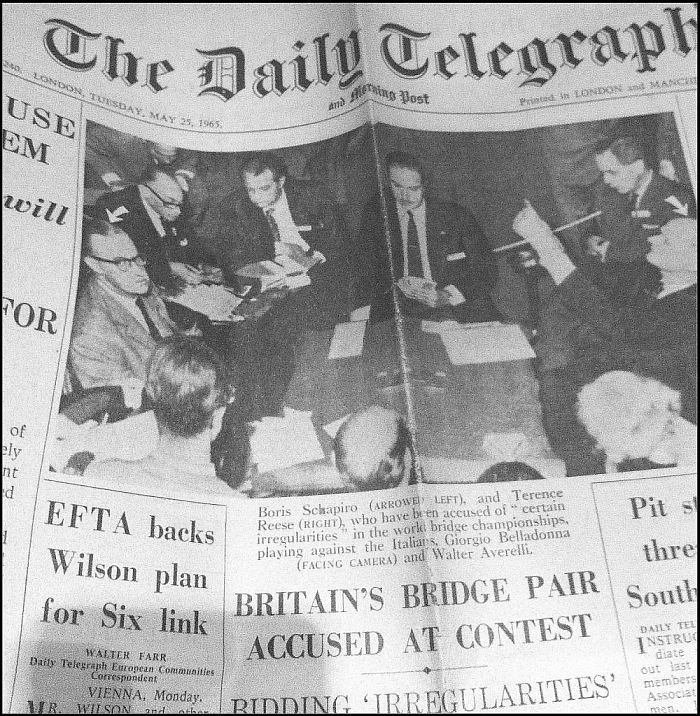
Durante i Campionati Mondiali del 1965 che si svolsero a Buenos Aires si verificò quello che forse può essere definito il più grande scandalo della storia del Bridge di tutti i tempi.
Quell'anno, quattro Paesi erano in gara per aggiudicarsi la prestigiosa Bermuda Bowl: l'Argentina padrona di casa, gli azzurri del Blue Team, gli americani ed i britannici.
L'Italia è la solita favorita, ma molti occhi sono puntati anche sulla squadra britannica che può avvalersi della formidabile coppia costituita da Terence Reese e Boris Shapiro.
Il terzo giorno di gara la Gran Bretagna affronta gli americani che hanno una delle loro coppie migliori in Jay Becker e Dorothy Hayden (una delle poche donne arrivate a giocare gli open della più prestigiosa competizione bridgistica del globo).
Durante il gioco, a Becker capita di notare che Reese stringe le carte in modo innaturale con due dita aperte a V, il campione americano non ci farebbe troppo caso se girandosi dall'altra parte non vedesse che anche Shapiro fa lo stesso e che, anzi, i due cambiano la postura della tenuta delle carte ad ogni smazzata.
|
|
Al termine della seduta pomeridiana del lunedì, Jay ne parla con la sua compagna e, insieme decidono di osservare meglio i due campionissimi e ne concludono che qualcosa di strano sta avvenendo.
|
|
|
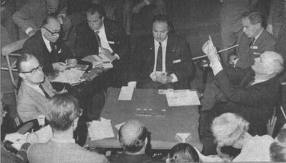
Buenos Aires 1965: Terence Reese alza le sue carte a favore degli spettatori. Al tavolo Shapiro, Belladonna e, di spalle, Avarelli.; all'angolo destro il capitano non giocatore britannico Ralph Swimmer. |
Dorothy ne parla in gran segreto con Allan Truscott, un famoso giocatore anglo/americano (che in seguito diverrà suo marito) che è presente nelle vesti di giornalista al seguito della carovana.
Intanto, il campionato prosegue ed il venerdì sono di fronte Italia e Gran Bretagna; il terzetto decide di osservare attentamente la coppia inglese per decodificare un eventuale codice di comunicazioni illecite.
Dopo varie ipotesi (le dita indicano il numero approssimato dei PO, quello degli Assi, etc.), Dorothy scopre che le dita indicano il numero delle carte di cuori!
Il sabato mattina successivo il terzetto informa riservatamente sia il capitano non giocatore inglese, Ralph Swimer che Geoffrey Butler che era il Chairman della British Bridge League.
L'accusa è gravissima e Butler e Swimer, alquanto increduli, decidono di osservare di persona il gioco del sabato pomeriggio, traendo conferma circa l'applicazione del codice individuato dall'americana.
Del fatto viene informato l'esecutivo della WBF che, riunitosi d'urgenza e ascoltati i testimoni decide all'unanimità (10 contro 0) circa la colpevolezza dei due. Il capitano inglese, che vi prese parte e che sembra avesse avuto in un incontro riservato, una confessione da parte di uno Shapiro in lacrime (che poi la ritratterà), ritira la coppia ed ottiene in cambio che sarà la BBL a portare avanti l'istanza contro i suoi due campioni.
La BBL si renderà artefice di una storica sentenza che costituisce a tutto oggi un precedente nella giustizia sportiva bridgistica mondiale.
Avendo analizzato ad uno ad uno i board giocati durante il Campionato dalla coppia incriminata, gli esperti nominati dalla Lega Britannica potettero rivelare che i due, dal punto di vista dei risultati ottenuti al tavolo, non si erano avvalsi delle informazioni che si scambiavano illecitamente e che, pertanto, anche qualora illecito ci fosse stato, non avendo condizionato in alcun modo il risultato delle gare, non era perseguibile!
Nel 1967 la WBF dichiarò che dal suo punto di vista la coppia inglese continuava ad essere colpevole nonostante l'assoluzione del tribunale della BBL che fu presieduto dal celebre giudice Sir John Foster.
Reese e Shapiro smisero di giocare insieme per sempre; fecero solo un timido tentativo di partecipazione alle selezioni inglesi per le Olimpiadi del 1968, subito abortito in quanto la WBF fece sapere che non avrebbe ammesso la squadra Inglese qualora i due le avessero vinte.
Shapiro abbandonò il Bridge sportivo per decenni, dedicandosi unicamente a quello di partita libera e ritornò sulle scene solo nel 1998 quando, alla veneranda età di 89 anni, partecipò e vinse il Campionato Mondiale Seniores a Lille!
Reese, dopo il veto della WBF, abbandonò il bridge sportivo per sempre e divenne uno degli scrittori di bridge più letti, amati ed apprezzati di ogni tempo. Egli non mancò di far sapere ai posteri la sua versione dei fatti nel suo: "Story of un Accusation" edito nel 1966.
Gli fece da contraltare Allan Truscott con il suo: "The Great Bridge Scandal".
Comunque siano veramente andate le cose, rimane certo che questa incresciosa vicenda, sottrasse al bridge sportivo internazionale due dei più straordinari giocatori che lo Sport della Mente abbia mai potuto allineare ai nastri di partenza.